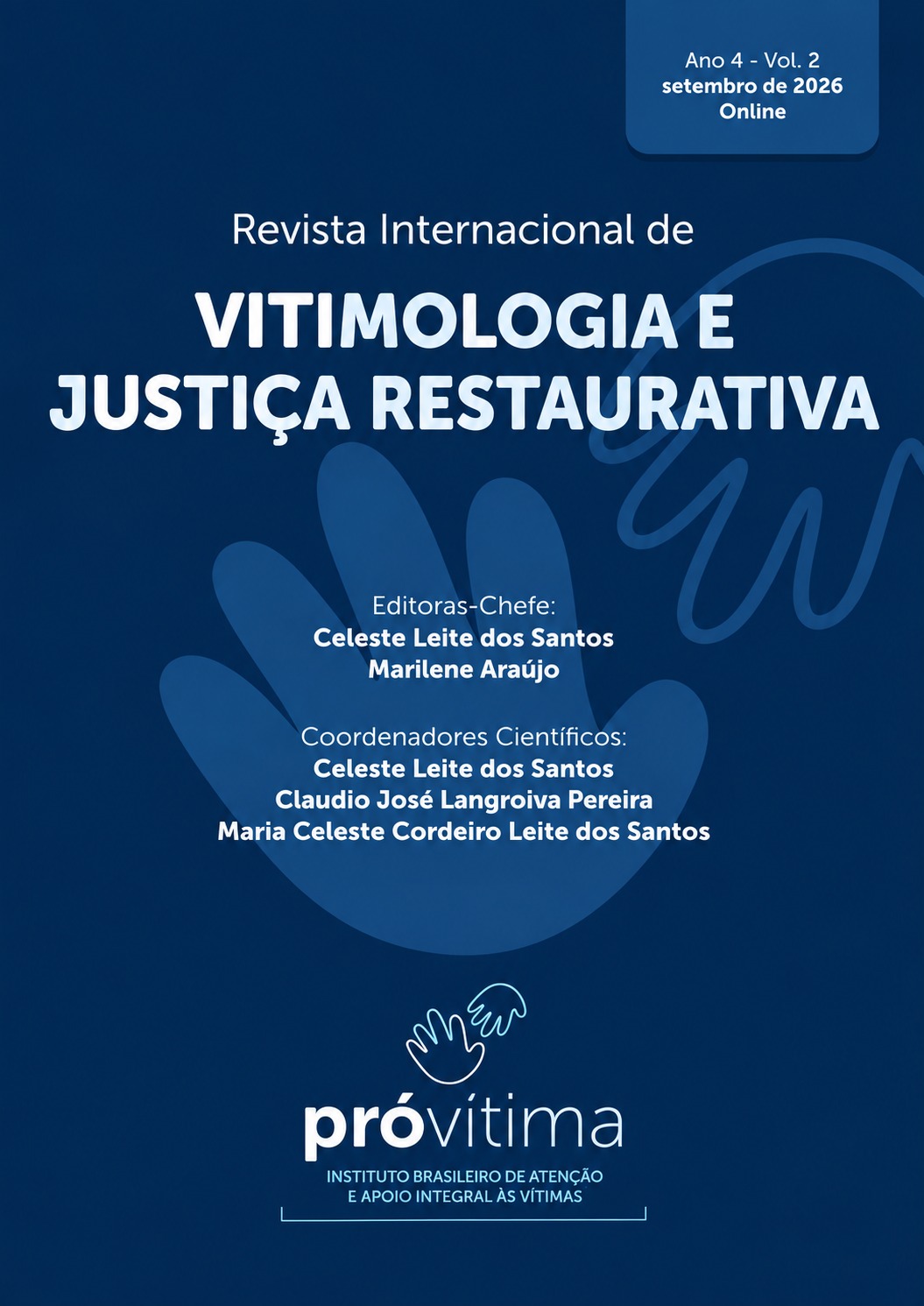
International Journal of Victimology and Restorative Justice: Focus, Scope, Section Policies, Copyright, Fees, Preservation Policies, License, Periodicity, Plagiarism Policy, Open Access, and Knowledge Dissemination
Focus and Scope
The International Journal of Victimology and Restorative Justice is dedicated to promoting Victimological Science as an autonomous discipline and disseminating scientific knowledge that addresses various forms of victimization and restorative justice practices. The journal explores and understands the diverse sources of victimization, which may originate from criminal or unlawful acts, as well as disasters, epidemics, public calamities, and wars.
We are committed to:
- Studying victimization from different perspectives, including the psychological, social, and economic impact on victims.
- Investigating public and private policy responses to victimization.
- Analyzing the support and recovery mechanisms available for victims.
- Examining the relationship between victimology and restorative justice, highlighting practices and approaches aimed at repairing harm and reconciling victims and offenders.
Ethics and Good Practices Policy
The journal follows rigorous standards of ethics and good practices at all stages of the editorial process. Authors, reviewers, and editors are expected to act with integrity, transparency, and responsibility. Plagiarism, data fabrication, and other unethical practices will not be tolerated. Detailed guidelines on ethics and good practices are provided to contributors to ensure compliance with the highest academic standards.
Section Policies
To ensure a clear and efficient structure, the journal has three main sections:
- Editorial: Provides an overview and contextualization of the themes addressed in each issue. Written by the chief editors or invited experts, the editorials reflect informed opinions on emerging issues, academic debates, and recent developments in the field of victimology and restorative justice.
- Articles: Dedicated to the publication of original research, case studies, systematic reviews, and theoretical analyses. Manuscripts submitted to this section undergo a rigorous peer-review process, ensuring the quality and academic integrity of the publications.
- Health, Well-Being, and Culture: Focuses on studies and practices that relate victimology and restorative justice to aspects of health, well-being, and culture. This section includes articles on the impact of victimization on the physical and mental health of victims, recovery strategies, the influence of cultural contexts, and the connection between art, culture, and healing processes.
Peer Review Process
All manuscripts submitted to the journal undergo a rigorous peer-review process to ensure the quality and academic integrity of the publications. This process involves the evaluation of experts in the field who provide constructive feedback and recommendations for the improvement of the submitted works.
Plagiarism Policy
The International Journal of Victimology and Restorative Justice is committed to maintaining the highest standards of academic integrity and publishing ethics. Plagiarism constitutes a severe violation of these standards and will not be tolerated. This policy defines the guidelines and procedures for preventing, detecting, and addressing plagiarism in all articles submitted for publication.
Plagiarism is the practice of presenting another person's work, ideas, or words as one's own without proper citation or acknowledgment. Plagiarism can take various forms, including but not limited to:
- Literal copying of sections of other works without proper citation.
- Paraphrasing ideas or theories of other authors without providing proper reference.
- Presenting work carried out by someone else, including purchased or commissioned works, as one's own.
- Self-plagiarism, which is the significant reuse of one's previously published works without proper citation.
To prevent plagiarism, the journal adopts the following measures:
- Guidelines for Authors: Providing clear guidelines on citations and references following international standards of scientific publication.
- Plagiarism Detection Tools: Using plagiarism detection software to check all submitted manuscripts before peer review.
If plagiarism is suspected, the following steps will be taken:
- Initial Assessment: The editorial team will conduct an initial assessment to determine if the plagiarism allegation is substantial.
- Notification to the Author: If a possible violation is found, the author will be notified and given the opportunity to respond to the allegations.
- Review and Decision: The editorial team, possibly in consultation with external experts, will examine the author's response and make a final decision on the case.
- Disciplinary Actions: Depending on the severity of the plagiarism, actions may include manuscript rejection, a ban on future submissions, and notification to the authors' affiliated institutions.
Periodicity
The International Journal of Victimology and Restorative Justice is published quarterly. Each issue features updated research, case studies, theoretical analyses, and innovative practices that contribute to the advancement of victimological science and restorative justice.
Open Access Policy
The journal follows an open access policy. All published articles are freely accessible to the public, allowing for the wide dissemination of knowledge and promoting equitable access to scientific information.
Copyright
The International Journal of Victimology and Restorative Justice is committed to respecting copyright and promoting the dissemination of scientific knowledge ethically and transparently. All articles published in the journal remain under the copyright of the authors, who grant the journal the right of first publication. Authors are encouraged to share and distribute their work, as long as it is properly cited and referenced.
No Article Processing Fee
The journal adopts a no article processing fee policy. This means that there are no costs for authors during the submission, evaluation, and publication process of their manuscripts. Our goal is to facilitate access and participation for researchers from all parts of the world, regardless of their financial conditions.
Preservation Policies
The International Journal of Victimology and Restorative Justice follows rigorous digital preservation policies to ensure the longevity and accessibility of published content. We use reliable archiving systems and international preservation standards, ensuring that articles are available for future generations of researchers and readers.
License
All articles published in the journal are licensed under the Creative Commons Attribution 4.0 License. This allows others to distribute, remix, adapt, and build upon the work, even for commercial purposes, as long as proper attribution is given to the original work. This license promotes the wide and equitable dissemination of knowledge, encouraging collaboration and the ethical use of scientific content.
Read more about International Journal of Victimology and Restorative Justice: Focus, Scope, Section Policies, Copyright, Fees, Preservation Policies, License, Periodicity, Plagiarism Policy, Open Access, and Knowledge Dissemination